Dominican Republic Travel Guides:
Dominican Republic Geography
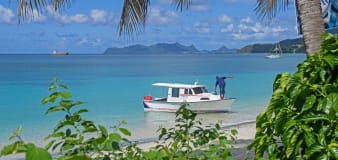
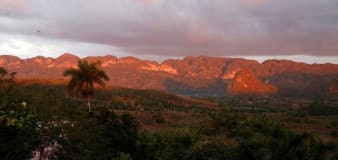
A land covered with rugged highlands and verdurous valleys, the Dominican Republic is a naturally beautiful country where just taking a walk provides many photographic opportunities. In addition to the rich outcroppings and lush foliage, the beaches of the Dominican Republic are another place where Mother Nature has blessed this land. With sands of the purest white leading down to a sparkling deep, blue sea, the
Dominican Republic geography is painted from a palate of only the most vibrant colors.
The Dominican Republic Geography -- The Country's LocationThe Dominican Republic is a part of the Caribbean island of Hispaniola. The island of Hispaniola is separated into two countries, the Dominican Republic and Haiti. Roughly twice the size of New Hampshire, the Dominican Republic assumes over two-thirds of the island. The Dominican Republic is bordered by Haiti to the west, the Caribbean Sea to the south and the North Atlantic Ocean to the north.
The Dominican Republic Geography -- The HighlandsDominican Republic travel will introduce to anyone the many mountain ranges that are interspersed with the region's lush rainforests and valleys. In the north, the Cordillera Septentrional Mountains gradually gives way to the Cibao Valley that stretches all the way to the Bay of Samana in the east.
The Cordillera Central borders with Haiti and it is the largest of the Dominican Republic's mountain ranges. While it features many prominent peaks, it's Duarte Peak that claims the title as the Caribbean's highest mountain.
In the south, the Sierra de Neiba Mountains rise an impressive 7,200 feet to its highest peak. Much of the water that drains off the mountain feeds directly into Lake Enriquillo, while the remainder is lost to the Caribbean.
Farthest south lays the Sierra de Baoruco range. The Sierra de Baoruco borders Cape Beata as well as the infertile plains of the Pedernales region in the Southwest.
The eastern mountain range is named the Cordillera Oriental and it's one of the lesser rugged mountains in the Dominican Republic. It separates the Northern coastal plains from the sugar cane fields of the Southern region's lowlands.
The Dominican Republic Geography -- The SettlementsThe Southern region of the Dominican Republic is where the country's main sources of sugar cane are produced. This region is home to mainly Europeans; however closer to the Southern shoreline is where most of the migrant workers of the area's farms and plantations live. This region is home to smaller towns like Azua.
The nation's capital, Santo Domingo, is located in the South-Central part of the country and it's the largest and most densely populated of the Dominican Republic's cities. In the north, the Cibao Valley is home to some of the other predominant cities in the country, namely Santiago, La Vega and San Francisco de Macorís.
The Southeast is home to the secondary cities of La Romana and San Pedro de Macorís, while in the Southwest, Barahona is found. One of the nation's most popular tourist destinations, Puerto Plata, is located in the Northern region.
A country that's fortuitous with natural beauty, a
Dominican Republic vacation never ceases to amaze every guest. From the highest peak to the crystalline beaches, you can expect the Dominican Republic's geography to be as varied and memorable as your time in this secluded paradise. To learn more about a vacation to this tropical retreat, use the Internet to discover information about airfare, hotels and resorts, local attractions and even dining recommendations.